SLIDER

michael james
Showing posts with label michael james. Show all posts

chocolate cake with caramelised almond praline topping

7 Sept 2026


I still rue the demise of the print version of Delicious Magazine because I like a hard copy from which to cook. Today's bake
 is a Michael James recipe which popped up on my Delicious Magazine IG feed. It looked appealling and best of all it was made with pantry items. I only needed to buy some more flaked almonds and the rest of the ingredients were already in my fridge or pantry.


One review I read complained that the cake batter was too generous for the tin size, and spilled out of the tin when baked. I adjusted all the ingredients down to fit my tin but even then the cake batter was close to overflowing during the bake. So I'd suggest filling the tin 2/3 only as it's inclined to rise during the bake.

Here's the recipe for you, adapted from this recipe, which makes a 7 cm deep 17.5 cm x 8.5 cm (base) loaf. For all my recipes I use a 250ml cup and a 20 ml tablespoon, unsalted butter and 60g eggs. My oven is a conventional gas oven so if your oven is fan forced, you may need to reduce the oven temperature by 20°C.


Chocolate cake with caramelised almond praline topping
Almond praline
35g unsalted butter, chopped
pinch seasalt flakes
85g brown sugar
Finely grated zest of 1 small orange
25g honey or golden syrup
80g flaked almonds

Cake ingredients 
114g plain flour
35g dutched cocoa powder
1 tsp bicarb soda
pinch fine sea salt
150g unsalted butter, softened
200g caster sugar
2 large eggs, at room temperature
1/2 tsp vanilla bean paste or vanilla extract
85g buttermilk

Method
Preheat the oven to 160°C fan-forced/170°C, conventional. Grease a deep 17.5 cm x 8.5cm (base) loaf pan and line the base and sides with baking paper.

Almond topping
Melt the butter, sugar, orange zest and honey or syrup in a small saucepan over low heat, stirring constantly until the sugar has dissolved and the mixture is thick and syrupy. Pour the syrup into the prepared pan, then sprinkle the flaked almonds evenly over the top. Set aside to cool while you make the cake batter.

Sift the flour, cocoa, bicarb and the fine salt together into a medium bowl, then set aside. 


In a stand mixer fitted with the paddle attachment, cream the butter and sugar until pale and fluffy.

In a separate bowl, whisk together the eggs and vanilla. With the mixer still running on a slow speed, gradually add the egg to the butter mixture a little at a time, ensuring each addition is fully incorporated before adding the next.

Alternate between adding a third of the dry ingredients and a third of the buttermilk to the mixer bowl, mixing well between each addition, until all the ingredients have been added and the batter has just come together. Scrape down the sides of the bowl to ensure that the batter is completely mixed.

Gently pour the batter into the pan over the almonds and caramel, ensuring the tin is only 2/3 full as the cake will rise. Bake for 1 hour 15 minutes at 
160°C fan-forced/170°C, conventional, or until the top is firm to touch and a skewer inserted into the centre comes out clean.


Leave to cool in the pan for a few minutes, then set a wire rack over a tray lined with baking paper. Invert the still-warm cake onto the wire rack, then gently lift off the pan, being careful to avoid touching the caramel, which will still be extremely hot. 


Scrape any leftover almonds and caramel left in the pan onto the loaf. Cool completely before serving. 


This makes a deeply dark cocoa flavoured cake with a lovely almond praline topping. I think it would eat better with a more even cake to praline ratio so I might remake it as a slice or squares. Watch this space!

See you all again next week with some more baking from my kitchen.

Bye for now,

Jillian


PRINT RECIPE

treacle and vanilla salt tart

16 Feb 2026


I have some 
shortcrust pastry in my freezer, leftover from other baking projects. As I don't like to waste food I've been looking at tart recipes both online and in my recipe books. Many of the recipes I found seemed to be riffs on the classic British treacle tart. As I've never had treacle tart before I thought I better make one first.


There are so many treacle tart recipes out there but I liked the sound of Heston Blumenthal's recipe. The recipe wasn't very clearly written though and made a huge tart. I've made a few Michael James recipes in the past and they're pretty reliable so when I discovered this Michael James recipe, which looked similar to Heston's, that's the recipe I decided to use. 

I used my leftover pastry but I've linked to the original recipe if you'd like to make Michael's pastry recipe. You'll need to start this recipe the day before serving as the filling gets an overnight sleep. The vanilla salt and the pastry can be made ahead of time and the tart case can be pre-baked.


Here's the recipe for you which makes an 18-cm tart. For a larger tart please refer to the linked recipe. For all my recipes, I use a 250 ml cup and a 20 ml tablespoon. All eggs are 60 grams and my oven is a conventional oven not fan forced, so you may need to reduce your oven temperature by 20°C.


Treacle and vanilla salt tart - makes an 18-cm tart
Almond shortcrust pastry
45g icing sugar
25g almond meal
200g plain flour
pinch salt
110g cold unsalted butter, diced
1 egg
cold water, if needed

Treacle filling
1 egg 
20g thick cream
1/2 tsp fine sea salt
227g golden syrup 
45g unsalted butter
45g sourdough breadcrumbs
3 tsp lemon rind
35mls lemon juice

Vanilla salt
½ vanilla pod, seeds scraped
1 tsp sea salt

To serve 
clotted cream or crème fraîche, 

Shortcrust pastry
Combine all the dry ingredients in a food processor, and whiz for a few seconds until well combined and free of lumps. Add the cold butter and whiz until the mixture resembles breadcrumbs. Add the egg and sufficient cold water and whiz until a soft dough just starts to form around the blade. Remove the dough from the food processor and gather the pastry into a ball; flatten slightly before wrapping in plastic and placing in the fridge. 

You’ll only need about half of the pastry dough to make an 18-cm tart. The pastry freezes well so just wrap the remaining pastry in plastic wrap and store in the freezer. 


Treacle filling 
Whisk together the egg, cream and salt in a large mixing bowl and set aside. 

Brown the butter in a saucepan over medium heat. Once melted, leave it until it starts to brown – you will know it’s ready when it stops spitting and bubbling, and produces a wonderful nutty aroma. This means the water has evaporated and it’s close to burning. Strain through a fine sieve to remove the solids, and weigh 30g into a medium sized bowl.

Add the golden syrup to the butter and mix to combine. Stir this into the egg mixture, then add the breadcrumbs, followed by the lemon zest and juice, stirring well between each addition. Chill the mixture in the fridge overnight to allow the breadcrumbs to absorb all the liquid.

Day of baking
On a lightly floured bench, roll the pastry out into a large disc, 4mm thick. Lightly grease a 18-cm round tart tin with butter, and gently lay the pastry over it. Press the pastry firmly into the base of the tin. Trim the excess with a knife, then place the tart shell in the fridge to rest for an hour. Retain the excess pastry to patch the tart should cracks form as it bakes.


Preheat the oven to 160°C, fan forced/180°C, conventional. Line the rested pastry case with baking paper or foil and fill with dried beans, rice or baking weights. Bake for 25 minutes, then remove the paper and beans and bake the tart shell for a further 10 minutes, until lightly golden. Set aside to cool in the tin and patch any cracks that have formed with some of the excess pastry.

Vanilla salt
Rub the vanilla seeds and sea salt together. You will have more than you need, but it keeps for ages in a small jar, so you can save it for later.


Assembly
Preheat the oven to 155°C, fan forced/175°C, conventional. Take the breadcrumb mix out of the fridge. It will have separated slightly, so mix it with a spoon until it comes back together then pour it into a jug.

Place the tart shell on a flat tray lined with baking paper. Place the tray in the oven, then gently pour in the treacle mixture. Fill the pastry case to just below the rim, as it will expand a bit in the oven. Bake for 45–50 minutes, until just set. The filling should be just firm on the edges and have a bit of wobble in the centre, like a jelly.


Place the tart on a wire rack to cool, then remove the tart from the tin and transfer to a serving dish. Sprinkle the top with the vanilla salt, and serve with a dollop of clotted cream or crème fraîche, if desired.


I was expecting a somewhat bland tart so I was surprised by the intensity of the lemon flavour. Next time I'd use less lemon rind and perhaps a little less juice. The filling is quite sweet so I think the cream or crème fraîche toppings are necessary, not optional extras. Now I can't wait to make the other tarts. 

See you all again next week with some more baking from my kitchen.

Bye for now,

Jillian


PRINT RECIPE

macadamia and raspberry blondie

14 Jul 2025


Last month I borrowed Michael James excellent baking book, Sweet Seasons, from the library. I bookmarked quite a few recipes and for my first bake, I decided to make a batch of macadamia and raspberry blondies topped with caramelised white chocolate ganache. Whilst I am not a regular chocolate fan, I've always loved white chocolate in all its forms and in particular, caramelised white chocolate.


It's raspberry season here, so fresh berries abound but for baking I prefer to use frozen berries. Michael suggests using r
hubarb when raspberries are out of season. Just gently poach it in a not-too-sweet sugar syrup - you want the acidity of the rhubarb to meet the sweetness of the white chocolate. Pistachio and rhubarb are also a wonderful combination, so consider switching out the macadamias as well. A slightly different version of the blondie can be found here, on the Delicious website.


Here's 
the recipe for you, adapted from Sweet Seasons, which makes a 7-inch square blondie. My blondies were pretty chunky, so I think you could also bake the blondies in an 8-inch square tin or a slice tin, but it might take less time to bake. For all my recipes I use a 250ml cup and a 20-ml tablespoon, unsalted butter and 60g eggs. My oven is a conventional gas oven so if your oven is fan forced you may need to reduce the oven temperature by 20°C.

Macadamia and raspberry blondie - makes 12 blondies
Ingredients
215g spelt flour
slightly heaped 1 tsp baking powder
3/4 tsp fine sea salt
1 and 1/2 tbs malted milk powder 
145g unsalted butter, softened
145g dark brown sugar
75g whole egg, at room temperature (
1 and 1/2 eggs)
1 and 1/2 tsp vanilla paste
85g toasted macadamias, roughly chopped
75g white chocolate bar cut into chunks
100g raspberries, fresh or frozen
grated zest of 1 lemon

Caramelised white chocolate ganache
125 g caramelised white chocolate bar
125 g cream

To decorate (optional)
Freeze dried raspberries

Method
Preheat the oven to 170°C, fan forced. Grease and line a 17 x 17 cm baking tin or a slice tin with baking paper.

Ganache
Finely chop the caramelised white chocolate bar and place into a heatproof bowl.  Place the cream in a small saucepan and bring to just below the boil, then pour the cream over the chocolate. Set aside for 5 minutes, then stir until smooth. Set aside at room temperature until it becomes a thick, spreadable consistency. You can refrigerate the mixture to speed up the process.


Blondie
Whisk the flour, baking powder, salt and malted milk powder together in a medium bowl to combine and knock out any lumps.

In a stand mixer fitted with the paddle attachment, beat the butter and brown sugar on medium speed for 10 minutes, until pale and light. Scrape the side of the bowl with a spatula, then add the eggs and vanilla and beat until just combined.
Add the flour mixture in two stages, beating at each addition until just combined, and scraping down the side of the bowl as required. Add the macadamias and white chocolate chips and mix until just combined. The mixture will be thick.


Transfer the mixture into the prepared tin and spread it out evenly with a spatula. Place the raspberries evenly over the top. Bake for 25-30 minutes on the centre rack or until the blondie is golden on top, and a skewer inserted into the middle comes out clean. Transfer to a wire rack to cool.


Once cool, spread the ganache over the blondie, sprinkle with freeze dried raspberries, if desired, then cut into slices for serving.


Store in an airtight container at room temperature for up to 5 days. 


These were very luxe and now I can't wait to make a rhubarb and pistachio version.

See you all again next week with some more baking from my kitchen.

Bye for now,

Jillain


PRINT RECIPE

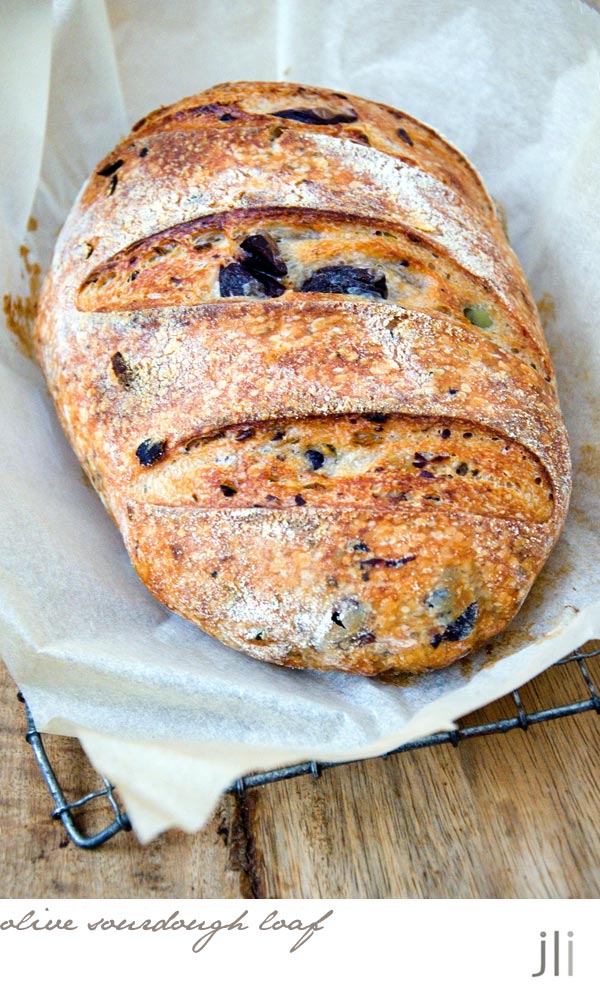
olive sourdough loaf

12 Feb 2022

As you know, I fell down the sourdough rabbit hole at Christmas time. Once I managed to get a viable starter it seemed silly not to keep using it. However I really don't eat much bread so I only bake a loaf every week or two. I start the process Friday night when I feed my starter; I prepare the dough on Saturday then bake the loaf on Sunday. I slice the bread the day it's baked, freeze it and defrost the slices as needed.

Last year a workmate introduced me to the delights of sourdough olive bread. I've been using the Tivoli Road Baker recipe book as my sourdough resource and as soon as I spied the picture of their olive loaf I knew I had to make it. 


Every time I make sourdough bread I'm convinced it will be a disaster. As I'm still a novice, I find the sticky dough a bit hard to wrangle so I reduce the water quantity in the dough to a level I can just about manage. I downsized the recipe to make a smaller loaf and as I don't own a proving basket, I proved the bread in a loaf tin. The loaf tin was a bit too big for the amount of dough so when I turned out the loaf it looked a bit sad and flat. 
 
 
However once in the oven the magic happened and before too long I had an pretty nice looking loaf of olive bread. I managed to exert self control and waited for the bread to cool down before slicing into it and it was just perfect!
 

If you'd like to make your own sourdough olive bread, here’s the recipe for you which makes a medium size loaf. For all my recipes I use a 250ml cup and a 20 ml tablespoon, unsalted butter and 60g eggs. My oven is a conventional gas oven so if your oven is fan forced you may need to reduce the oven temperature by 20°C.

The marinated olive recipe makes more than you need. Just keep any leftovers in the fridge then bring them to room temperature before using.

Sourdough olive bread, adapted from the Tivoli Road Baker
Marinated Olives
125g green olives, pitted 
125g black olives, pitted
1 sprig rosemary leaves picked and coarsely chopped
1/2 tsp dried thyme leaves
1 sprig oregano leaves picked and coarsely chopped
1/2 lemon, zested and quartered
2 tsp extra virgin olive oil

Method
The day before you mix the dough, drain the olives well and put them in a bowl with all the marinade ingredients. Mix to combine, cover and leave at room temperature to marinate overnight.

Tapenade
Before you mix the dough, place 75g of olives from the marinade in a blender and blitz until you have a coarse paste. The coarse chunks will add texture and give the bread an extra olive hit. Place in a fine sieve over the sink to drain any excess liquid and then mix to combine with 100g of marinated olives.

Starter Build
40g starter
20g baker’s flour
20g wholemeal flour
40g water

Method
Around 4–6 hours before you plan to mix your dough, combine the starter, flours and water for the starter build, mixing well to combine. You will use 70g of this for the dough; retain the rest for maintaining your starter.

Dough
70g starter
250g baker’s flour
70g wholemeal flour
200g water
6g salt
100g marinated olives
75g tapenade
15g baker’s flour
15g semolina

Method
At least 30 minutes before you plan to mix the dough, combine the flours and water in a large mixing bowl. Mix them with your hands until thoroughly combined, and then cover with a damp cloth and set aside for the autolyse.

When the starter is ripe and bubbly, mix it with the flour and water, sprinkle over the salt and finish mixing the dough. I normally use my stand mixer and mix for 5 minutes using the dough hook. Cover with a damp cloth and set aside in a warm place for at least 30 minutes, before your first set of folds

Dust the remaining olives with some of the flour and semolina to coat. This will make it easier to incorporate them into the dough and distribute them evenly. As you do the first turn and fold add the olives and the tapenade, ensuring they are evenly distributed. Complete three sets of folds, resting the dough in between each one for 30–45 minutes. After your last set of folds, cover the dough with a damp cloth and leave to prove at room temperature for 2–3 hours.

Scrape the dough onto the bench; pre-shape the dough, cover with a damp cloth and leave it to rest on the bench for 15–20 minutes. When the dough has relaxed, shape the dough as desired, then place it seam side up in a lightly floured proving basket. Cover with a damp cloth and place in the fridge overnight, until ready to bake.

An hour before you plan to bake the loaf, place a Dutch oven onto the centre rack of your oven then heat to it's maximum temperature. When it's time to bake, invert the loaf onto a piece of baking paper; lightly dust the top of the loaf with semolina then score a few times with a razor blade or a sharp knife. 
 

Carefully place the loaf into the Dutch oven using the baking paper as a handle and place the lid on top. Bake the loaf for half an hour with the lid on, and then remove the lid and bake for a further 20-30 minutes or until you have a nice golden crust. Once baked, tip the bread out of the pan onto a wire rack to cool completely before slicing.
 
 
It's delicious as is or served topped with cream cheese and smoked trout and it also made a killer toasted cheese and tomato sandwich!

See you all again next week with some more baking from my kitchen. 

Bye for now, 

Jillian

PRINT RECIPE
© DELICIOUS BITES • Theme by Maira G.