A few weeks back I had a hankering for pie, specifically apple and blackberry pie. It's not blackberry season in Sydney but that didn't deter me. I checked the freezer cabinet in the supermarket and found a packet of frozen blackberries and so on Father's Day, away I went to make pie and to test out the oven.

For the pastry I adapted a recipe from Tara O'Brady and cobbled together a filling using the frozen berries and some canned pie apple I'd picked up at the shops.

Why pie apple? I've used tinned unsweetened pie apple to make apple pie my whole life and I can't see any reason to change my ways now. It doesn't involve all that peeling, coring, slicing and cooking of apples so it's a faster way to make a pie. If you'd like to make the pie using fresh apples, I always precook the apples in the microwave then let them cool before using them. I also decided to make a lattice pie because I wanted to see those juicy blackberries.
 Here's the recipe for you. For all my recipes, I use a 250 ml cup and a 20 ml tablespoon. All eggs are 60 grams and my oven is a conventional gas oven, so if your oven is fan forced, you may need to reduce your oven temperature by 20°C.
Apple and Blackberry Pie
Pastry
½ cup cold water
1 teaspoon lemon juice
2½ cups plain flour
1½ tbs caster sugar
pinch salt
250g cold unsalted butter, cut into small cubes
Filling
1 800g tin unsweetened pie apple (or 1 kilo green apples peeled sliced and stewed then cooled)
200g fresh or frozen blackberries
½ cup caster sugar
1 tsp cinnamon
2-3 tbs blackberry or cherry jam
Topping
Milk
Granulated sugar, for sprinkling
Pastry
Combine the cold water and lemon juice in a small jug. In the bowl of a food processor combine the flour, sugar and salt. Add the cubes of butter and process the mixture for about 10 seconds or until the butter is the size of peas. Add half the cold water and process for another 10 seconds. Check the mixture to see whether it clumps together when a small amount is squeezed. If not, then add the remaining water. Tip the mixture out onto a lightly floured surface and squeeze and flatten the mixture until it makes a dough. Avoid the temptation to knead the dough at any time. There should be visible streaks of butter in the pastry. Divide the pastry into two portions, and shape each into a circle. Wrap the pastry in plastic wrap and refrigerate for a few hours or overnight.
To make the filling
In a large bowl combine the cooked apple, the blackberries, the sugar and cinnamon and place in the fridge while preparing the pie.
Method
On a lightly floured surface, roll out one of the pastry circles and fit it into a 9-inch pie plate, leaving a small overhang around the rim. Spoon the jam into the base of the pie crust then spoon the fruit into the pastry shell mounding slightly in the centre. Brush milk over the pastry edge. Roll the second half of pastry into a circle. Leave whole, or cut into strips for lattice. Top the pie with the second crust, either whole or weaving into a lattice.
Trim the top crust to barely overlap the bottom. Lift the edge of the bottom crust over to enclose the top, rolling inwards with even, firm pressure. Keep working around the perimeter of the pie, forming the edge slightly inside the pan’s rim. Crimp or flute as desired. Place the pie onto a baking tray and refrigerate the pie for 30 minutes.
Preheat the oven to 190°C/375°F placing the rack in the lower third. Glaze pastry lightly with milk, cutting steam vents into the pastry if using a whole crust, then sprinkle with some granulated sugar. Bake the pie on the baking tray for 45 minutes. If the pastry isn’t golden brown at this stage, raise the oven temperature to 220°C, move the rack to the centre of the oven and bake for a further 10-15 minutes or until the pastry is golden and the juices are bubbling.

Allow the pie to cool a little to let the filling firm before serving with a nice dollop of cream.

My brother Farmer Andrew was in town unexpectedly on Sunday so he was invited to partake of pie. Very quickly half the pie was eaten and the other half swiftly followed when I took it into work the next day.
I guess I'll be making pie a bit more often in the future.
See you all again soon,
Jillian
I just love the taste and the look of blood oranges so whenever they appear in the fruit shop, I buy a few.

When I bought these oranges home from the fruit shop last weekend, I wasn't sure what I'd make. I found a photo of some lemon curd shortbread squares in 'The Cook and Baker' and inspired by the photo, I decided to create my own version.
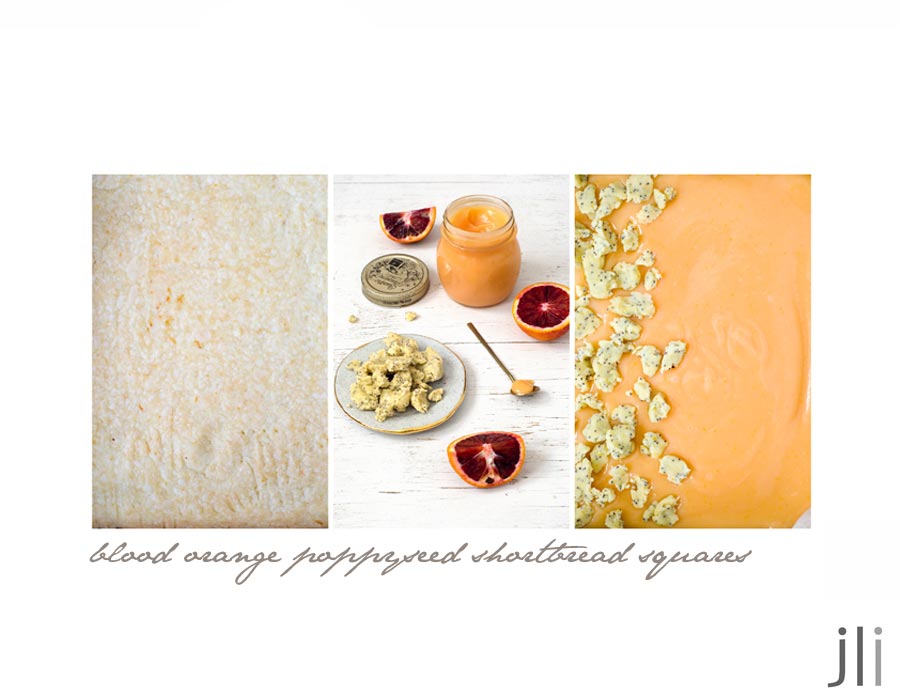 The base comes from my tart lemon squares recipe and the blood orange and lemon curd I adapted from my regular lemon curd recipe. I've given instructions for making the curd in a bain marie and the microwave but I always make my curd in the microwave these days as it's such a quick and easy method.

Make the curd ahead of time as it needs time to cool and set. You can bake and cool the base before you plan to serve the squares, then put the slice together just before serving. I made the slice using blood orange and lemon curd because blood oranges are in season but you could use any curd you like. Lemon would be great or my favourite, passionfruit and lemon. Then finally, if you don't like poppyseeds, you can leave them out of the crumble topping.

Here's the recipe for you. For all my recipes, I use a 250 ml cup and a 20 ml tablespoon. All eggs are 60 grams and my oven is a conventional gas oven, so if your oven is fan forced, you may need to reduce your oven temperature by 20°C.
Blood Orange Poppyseed Shortbread Squares - makes 16
Blood Orange and Lemon Curd
1 egg and 2 large egg yolks
1 tsp each finely grated blood orange and lemon rind
60ml strained blood orange juice
60ml strained lemon juice
½ cup caster sugar
90g unsalted butter
Method
Place the egg, egg yolks, the rinds, the juice and sugar into a small bowl and place over a pan of simmering water. Whisk the mixture until smooth. Keep whisking for 10 minutes until thickened or when the curd reaches 82°C when tested with a kitchen thermometer.
If you'd like to make the curd in the microwave, place the egg, egg yolks, the rinds, the juice and sugar into a small microwave proof bowl and microwave on medium high in 1 minute bursts, stirring well at the end of the minute. Keep doing this until the curd thickens or the curd reaches 82°C when tested with a kitchen thermometer. (My curd took 4 minutes to reach this stage but sometimes it can take up to 6 minutes).
Pass the curd through a sieve to remove any eggy bits before adding the butter in small batches until incorporated. Set the curd aside to cool then spoon the curd into a sterilised jar. Store the curd in the fridge where it will last a week.
Pastry
170g (6oz) unsalted butter
½ cup icing sugar
1 tsp grated blood orange rind
1½ cups plain flour
2 tsp poppy seeds
1 tbsp plain flour extra
Method
Grease and line the base and sides of an 8 inch (20 cm) square tin with baking paper. In a food processor, combine the butter, icing sugar and grated orange rind and process until smooth. Add the flour and process until a dough is formed. Take out a little over half the dough and press into the base of the prepared tin. Add the poppy seeds and the additional flour to the remaining dough. Whiz a few times until the poppy seeds are incorporated, then wrap in plastic and place in the fridge. If you don't have a food processor you can make this by creaming the butter and sugar and rind in a bowl before adding the remaining ingredients.

Bake the base at 180°C/350°F (conventional oven) for about 20 minutes or until the base is lightly browned. Place on a wire rack until cool. When the base is cold, spread with all the curd then grate or crumble the reserved pastry over the curd. Return the slice to the oven for a further 20 – 30 minutes or until the crumble is golden brown. Allow to cool completely before cutting into 16 squares.

These went down a treat at work so I can't wait to make them again using another flavoured curd. Next time I might try making a batch of raspberry and lemon curd shortbread squares.
See you all again soon,
Bye for now,
Jillian


